
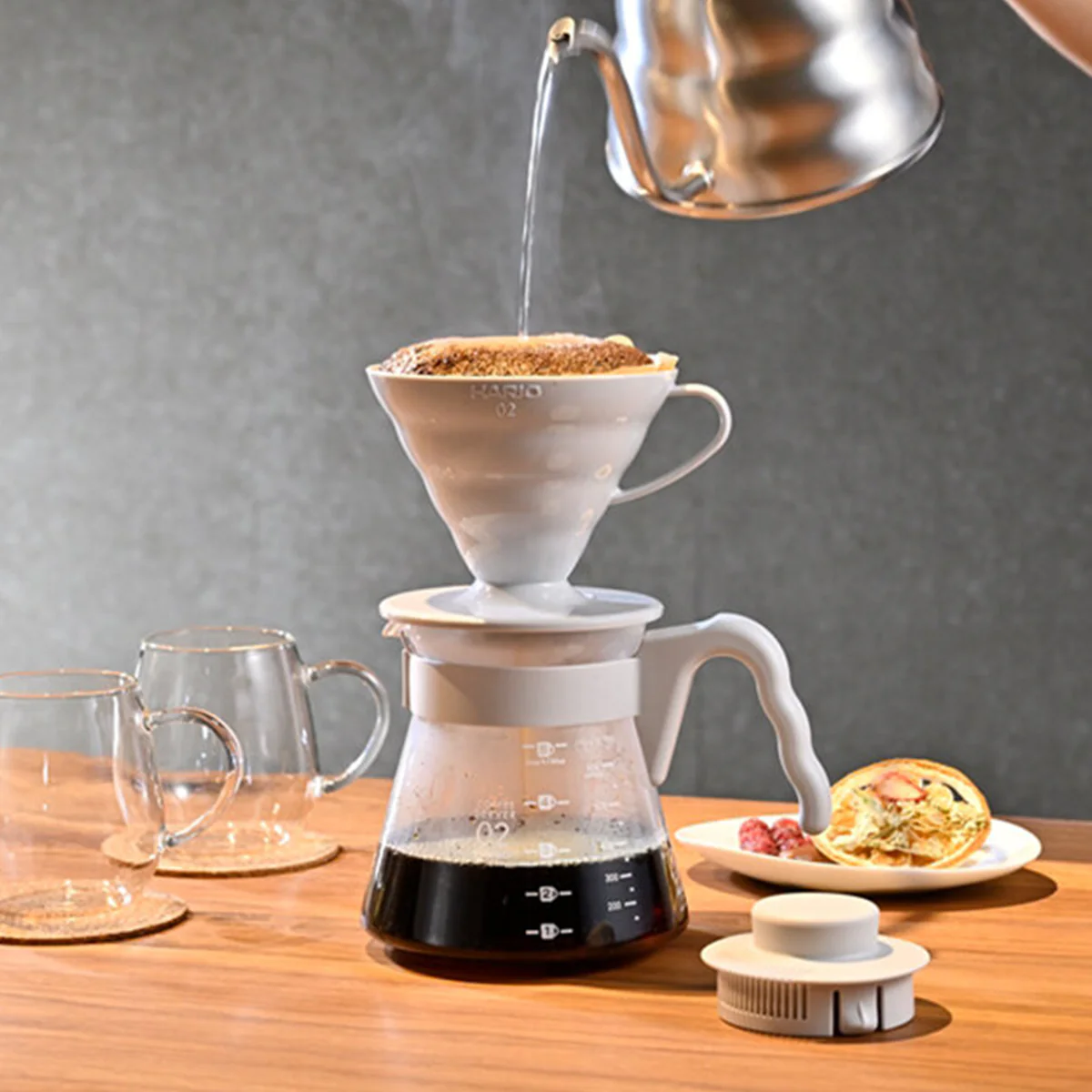
Pour-over coffee has become a staple for specialty coffee lovers because it offers clarity, balance, and control over brewing variables. At the heart of this method is the dripper — the cone-shaped device that holds your filter and coffee grounds while hot water extracts flavour. Of all the drippers available, the Hario V60 is one of the most iconic. But is it the best? How does it stack up against plastic and metal alternatives?
In this comprehensive guide, we compare the Hario V60 ceramic, plastic drippers, and metal drippers so you can decide which is right for your daily brew. We’ll break down how each performs in terms of heat retention, extraction quality, durability, and value for money.
What Makes the V60 Special?

The Hario V60 is a hallmark of pour-over brewing. Its name comes from the 60-degree angle of the cone, a feature that’s more than aesthetic — it influences how water flows through the coffee puck.
What sets the V60 apart is its:
- Spiral ribs, which allow water to flow freely while still maintaining contact with the grounds.
- Large single hole at the bottom, which gives you control over flow rate and extraction through your pouring technique.
- Wide range of materials, including ceramic, glass, plastic, and metal.
The combination of geometry and flow control makes the V60 one of the most versatile and widely used drippers in the world.
Overview: Ceramic, Plastic, Metal — What’s the Difference?

Before diving into detailed comparisons, let’s define the core differences:
- Ceramic (e.g., Hario V60 Ceramic): heavier, retains heat well, and often considered the benchmark for balanced extraction.
- Plastic (e.g., Hario V60 Plastic or other brands): lightweight, inexpensive, and durable, but doesn’t retain heat as well.
- Metal (e.g., stainless steel drippers): durable and heat-conductive, with fast heat transfer that affects brew temperature and flavour.
Each material brings strengths and trade-offs. Let’s explore how they perform in real brew situations.
Heat Retention: Ceramic vs Plastic vs Metal
Ceramic (Hario V60 Ceramic)
Ceramic drippers excel at heat retention. Because ceramic holds heat longer, the water temperature stays more stable throughout the pour-over process. This consistency is especially valuable when brewing multiple cups or pouring slowly over a long extraction.
For speciality coffee drinkers who snack on subtle acidity and aroma, this stability matters. Ceramic helps preserve the coffee’s temperature envelope so acids, sugars, and aromatics lock in rather than dissipate too quickly.
Plastic Drippers
Plastic drippers are lightweight and budget-friendly, but they’re not great at holding heat. They transfer heat to the environment faster than ceramic, which can lead to cooler brew temperatures if you’re not careful with your kettle heat and timing.
This isn’t necessarily a deal-breaker — many home brewers use plastic V60s successfully — but it does mean your final flavour can be more sensitive to room temperature and pouring technique.
Metal Drippers
Metal drippers (usually stainless steel) conduct heat quickly. This can be good or bad depending on your approach. Fast heat transfer helps the cone reach temperature quickly, but it can also cause temperature dips during longer pours if the dripper isn’t pre-heated well.
In practice, metal drippers reward a consistent pre-heat and steady pour. Without pre-warming, they can behave unpredictably compared to ceramic.
Extraction and Flow Control: How Geometry and Material Interact
At the heart of pour-over brewing is flow rate — how fast water moves through the coffee bed. Too fast, and you under-extract; too slow, and you risk bitterness.
Hario V60 (All Materials)
The V60 design itself — curved walls, spiral ribs, and single large hole — gives you maximum control over flow rate via pouring technique. A slower, more methodical pour will yield more extraction; a faster pour will reduce contact time. This nuance is what many coffee professionals love about the V60.
Whether ceramic, plastic, or metal, the V60 geometry allows you to control variables without being limited by the dripper’s internal shape.
Plastic Drippers (Non-V60 Alternatives)
Some plastic drippers from other brands (non-V60 designs) use different shapes — such as flat-bottom filters or smaller holes. These often produce more predictable, consistent drains that are forgiving for beginners, but they tend to give up some nuance and clarity.
Compared to a plastic V60, non-V60 plastic models often feel more automatic and less interactive.
Metal Drippers (Non-V60 Alternatives)
Metal drippers vary widely. Some mimic V60 geometry, others adopt unique cone shapes or even perforated baskets. In many cases, metal drippers shine with heavier, richer cups — because metal conducts heat efficiently and encourages even extraction when pre-heated properly.
When metal drippers follow V60 geometry, heat conduction can accelerate extraction and sometimes result in a slightly fuller body than ceramic.
Durability and Practicality
Ceramic Drippers
Ceramic looks beautiful and delivers great heat stability, but it’s fragile. A knocked counter or heavy pour of hot water can chip or crack the dripper. For home use in a stable environment, this isn’t a big deal. But for travel or busy kitchens, it’s a consideration.
Plastic Drippers
Plastic is the most durable and portable. If you’re travelling, camping, or brewing outside, plastic drippers win by a mile. They don’t break if dropped, and many fit standard V60 filters.
Plastic also heats up faster due to its low thermal mass, which can benefit beginners or those who struggle with temperature control.
Metal Drippers
Metal is durable and long-lasting, but can be hot to touch during brewing. Pre-heating and handling require care. They’re great for travel and outdoor use if you pour carefully.
Overall, in durability terms:
Plastic > Metal > Ceramic
Cleaning and Maintenance
All drippers are easy to clean, but the ease varies slightly:
- Ceramic: Wipes clean easily, just avoid thermal shock (don’t run hot water over a cold dripper).
- Plastic: Easy to rinse or put in the dishwasher, though some plastics can stain or retain flavours.
- Metal: Often dishwasher safe, but requires careful drying to avoid water spots.
For everyday use, plastic and metal have a slight edge in convenience. Ceramic is easy too — just treat it gently.
Taste & Final Cup Comparison
Ceramic V60
Cups brewed with a ceramic V60 are generally clean, balanced, and nuanced. Thanks to heat retention and the classic V60 geometry, you’ll notice clearer acidity and more layered flavours. This is why many specialty coffee shops favour ceramic V60s.
Plastic V60
Plastic doesn’t hold heat as well, which can make cups taste slightly cooler and sometimes less vibrant if not brewed with attention to water temperature and pouring rhythm. That said, it still makes excellent coffee and is forgiving enough for beginners.
Metal Drippers
Metal often produces a fuller body and slightly different flavour profile because it transfers heat more actively. These brews can feel richer and maybe less delicate than ceramic, which some drinkers prefer.
Across all materials, the difference in taste is often subtle — but noticeable to observers who pay attention to temperature and extraction consistency.
Price & Value: Which Dripper Offers the Most?
Drippers span a wide range of prices:
- Plastic V60 models and budget drippers are usually the most affordable.
- Ceramic V60s sit in the mid-range but deliver excellent long-term value due to brew quality.
- Metal drippers vary widely: some are affordable, others premium.
If you want the best “bang for the buck,” the plastic V60 is hard to beat. If flavour and presentation are your priority, ceramic often feels worth the extra cost.
Who Each Type Is Best For
- Ceramic V60: Ideal for specialty coffee lovers, home baristas who care about temperature stability, and anyone who enjoys nuanced flavour.
- Plastic Drippers: Best for beginners, travellers, students, or anyone who wants durability and convenience.
- Metal Drippers: Great for outdoor use, coffee lovers who prefer a richer body, or those wanting a durable but flavour-responsive dripper.
No matter which you pick, the core V60 geometry still gives you control over extraction and flow — a major reason this method remains a favourite worldwide.
Tips for Brewing Better with Any Dripper
Whether you use ceramic, plastic, or metal, these principles matter:
- Use fresh, filtered water near 92–96°C for best extraction.
- Pre-heat your dripper and vessel to avoid temperature loss.
- Grind uniformly—medium-fine for pour-overs, adjusted to taste.
- Pour steadily in controlled spirals to ensure even saturation.
Consistency in technique often matters more than the material of the dripper itself.
Final Verdict: Hario V60 vs Plastic vs Metal
The classic Hario V60 (especially in ceramic) remains the gold standard for balanced, clean pour-over coffee thanks to its thermal stability and iconic geometry. If sound flavour and café-grade results are your priority, it’s hard to beat.
Plastic drippers are perfect for durability, value, and portability. They may sacrifice a small amount of thermal control, but for everyday lovers and travellers, they’re a smart choice.
Metal drippers offer a unique sweet spot—a more durable medium with potential for richer flavour if pre-heating and technique are dialled in correctly.
Ultimately, the best dripper is the one that fits your lifestyle and brewing goals. Take your time, try different materials, and enjoy the journey of discovering how small changes — like your dripper — can reveal the subtle, delicious complexity of coffee.


5 Comments