
Coffee machines can cost anything from under a hundred dollars to prices that rival luxury watches or even small cars. At the very top end of the spectrum sits a rare category of espresso machines designed not just to make coffee, but to deliver absolute control, consistency, and craftsmanship at a professional or collector level.
These are the most expensive coffee machines in the world—used in world-class cafés, luxury hotels, competition stages, and high-end private kitchens. In this guide, we explore which machines command the highest prices, what makes them so costly, and whether they are ever worth owning outside of a commercial setting.
Why Are Some Coffee Machines So Expensive?
Before diving into individual machines, it’s important to understand what drives price at the ultra-premium end.
High-end espresso machines typically combine precision engineering, commercial-grade components, advanced temperature and pressure control, and hand-built craftsmanship. Many are manufactured in small quantities, using custom parts that are designed to last decades rather than years.
You’re not paying for convenience or automation here. You’re paying for control, reliability under pressure, and the ability to extract coffee at the highest possible level, shot after shot.
La Marzocco GS3 — The Gold Standard for Home Espresso

Often cited as the ultimate home espresso machine, the La Marzocco GS3 brings café-level performance into a residential format. Built by the legendary Italian manufacturer known for equipping elite cafés worldwide, the GS3 is essentially a scaled-down commercial machine.
It features a dual boiler system, PID temperature control, and exceptional thermal stability. Espresso quality is remarkably consistent, and steam power rivals that of café machines. The build quality is industrial, with stainless steel internals designed for long-term serviceability.
The GS3’s price reflects not only performance but lineage. You’re buying into a brand that dominates specialty coffee at the highest level.
Slayer Espresso Single Group — Cult Status and Total Control

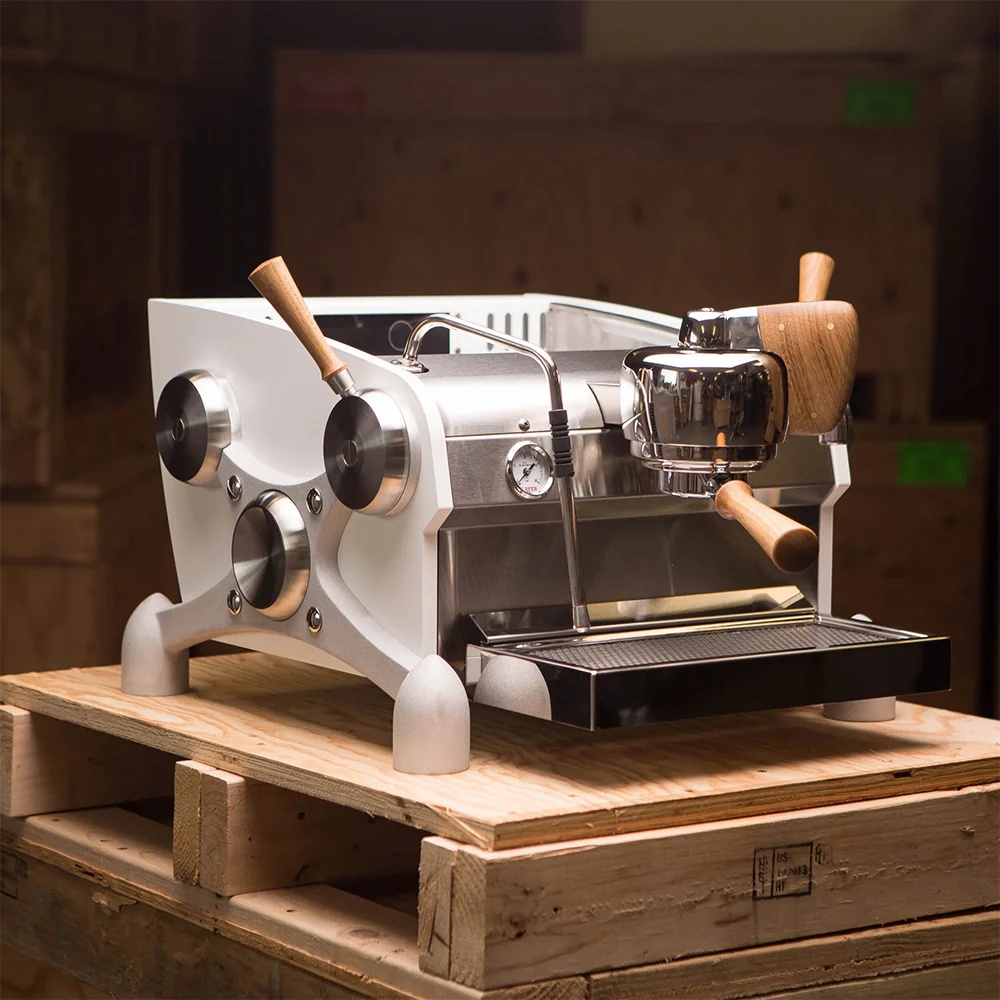
The Slayer Espresso Single Group has achieved near-mythical status among specialty coffee professionals. What sets it apart is its focus on manual pressure profiling, allowing baristas to manipulate flow and pressure throughout extraction.
Rather than relying on pre-programmed profiles, Slayer encourages hands-on brewing. This makes it incredibly powerful in skilled hands—and incredibly expensive.
Each machine is built with premium components and a distinctive industrial aesthetic. In cafés, Slayers often become visual centrepieces, reinforcing their status as both performance tools and brand statements.
Victoria Arduino Black Eagle — The Competition Icon

The Victoria Arduino Black Eagle is one of the most recognisable espresso machines in the world, thanks to its long association with the World Barista Championship. Designed for speed, consistency, and ergonomic workflow, it represents the pinnacle of competition-level engineering.
Key features include gravimetric dosing, individual group temperature control, and highly efficient boilers. Everything about the Black Eagle is designed to perform under pressure—both literal and competitive.
Its price reflects its role as a professional benchmark rather than a home appliance. This is a machine built to win championships and handle extreme service volumes.
Synesso MVP Hydra — Built Like a Tank, Brewed Like a Dream

Synesso machines are famous for durability, and the Synesso MVP Hydra is no exception. Designed for busy cafés, this machine uses a multi-boiler system where each group head has its own dedicated boiler.
This architecture allows unparalleled temperature control and consistency, even during high-volume service. Steam power is immense, and the machine’s internal layout prioritises reliability and easy servicing.
Synesso machines don’t chase trends or flashy design. They command high prices because they’re built to perform flawlessly for years in demanding environments
Kees van der Westen Speedster — Where Art Meets Engineering

If there is a machine that truly blurs the line between espresso equipment and art, it’s the Kees van der Westen Speedster. Hand-built in the Netherlands, each Speedster is assembled with extraordinary attention to detail.
The design is instantly recognisable, with exposed pressure gauges, sculptural panels, and impeccable finishing. Internally, it uses a hybrid boiler system that ensures exceptional temperature stability and pressure control.
Speedsters are produced in limited numbers, contributing to their high price and cult following. Many owners consider them heirloom machines rather than appliances.
Faema E71 — Italian Innovation Reimagined

The Faema E71 represents a modern reinterpretation of classic Italian espresso design. Featuring advanced thermal systems, independent boilers, and sophisticated electronic control, it’s aimed squarely at high-end cafés that want precision without sacrificing visual impact.
Faema’s long heritage in espresso innovation adds to the E71’s prestige. The price reflects both technology and brand legacy.
Are These Machines Ever Worth It for Home Use?
For most people, the answer is no—and that’s okay.
Ultra-expensive espresso machines are designed for:
- High-volume café service
- Professional baristas
- Competition environments
- Luxury commercial spaces
However, some home enthusiasts do invest in machines like the La Marzocco GS3 or Kees van der Westen Speedster. In these cases, the appeal isn’t just coffee quality—it’s ownership, longevity, and craftsmanship.
For someone who drinks espresso daily, values mechanical excellence, and plans to keep the machine for decades, the cost can make sense on a per-cup basis. But it’s very much a passion purchase.
What You’re Really Paying For
When you buy one of the most expensive coffee machines in the world, you’re paying for:
- Temperature stability at the highest level
- Pressure consistency shot after shot
- Commercial-grade components
- Hand-built or low-volume manufacturing
- Serviceability over decades
- Brand heritage and reputation
You’re not paying for convenience, compactness, or ease of use.
The Rise of Luxury Coffee at Home
As coffee culture matures, more consumers are treating coffee like wine or watches—something worth investing in deeply. This has driven demand for commercial-grade machines in residential settings, especially among serious enthusiasts.
Manufacturers have responded by offering smaller footprints, quieter pumps, and home-friendly versions of café machines—without sacrificing performance.
Final Verdict: The Price of Perfection
The most expensive coffee machines in the world aren’t about making “better” coffee in a casual sense. They’re about control, consistency, and craftsmanship taken to the extreme.
For cafés, these machines are business investments. For competitors, they’re tools of the trade. For a select group of home users, they’re passion objects—machines that turn daily coffee into a lifelong ritual.
You don’t need a five-figure espresso machine to enjoy great coffee. But understanding what makes these machines so expensive offers insight into what truly matters in espresso: temperature, pressure, and precision—executed without compromise.


