
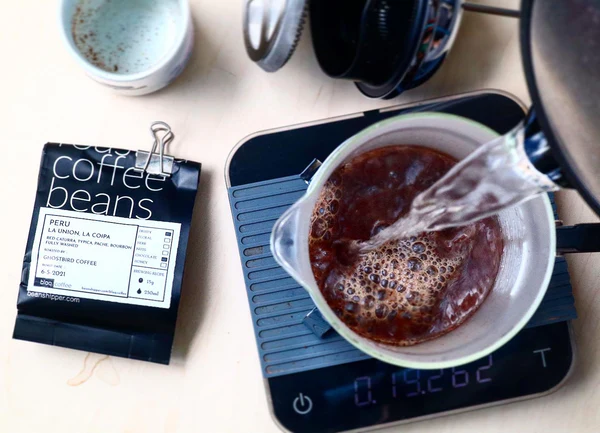
If you’ve ever wondered why some cups of coffee taste bright and juicy while others feel smooth and mellow, the answer often lies in a deceptively simple variable: the brewing ratio. Coffee professionals, baristas, and home brewers all rely on ratios because they dictate the balance between coffee strength, flavour clarity, and overall extraction. Among the most common ratios used in manual brewing are 1:15 and 1:18, and while the difference looks small on paper, it can dramatically influence the way your coffee tastes.
This comprehensive guide breaks down what brewing ratios really mean, how they affect your cup, when to use each one, and how to start experimenting like a pro.
What Is a Coffee Brewing Ratio?

At its core, a coffee brewing ratio compares the amount of coffee grounds to water. It’s usually written like this:
1:15 = 1 gram of coffee to 15 grams (or milliliters) of water.
This means that if you use 20 grams of coffee, you’ll pour 300 grams of water over it to maintain a 1:15 ratio. Ratios matter because coffee extraction depends on how much soluble flavour material is pulled from the grounds into the water. A slight change in ratio can shift a brew from bold to balanced or from delicate to watery.
The brewing ratio is also one of the few variables that requires no special tools—just a scale and your preferred brew method—which is why it’s one of the first levers baristas adjust when refining a recipe.
Why Brewing Ratios Matter More Than You Think
Coffee contains hundreds of flavour compounds, and extraction determines how much of them end up in your cup. More water relative to coffee generally leads to lighter flavours, while less water creates a fuller, stronger brew. But the ratio doesn’t only affect strength—it influences sweetness, acidity, body, aroma, clarity, and perceived bitterness.
Understanding ratios helps you brew more consistently. Whether you’re using a V60, Aeropress, French press, Clever Dripper, or drip machine, keeping the coffee-to-water ratio constant means you can experiment with grind size or brewing time without starting from zero.
Most specialty cafes stick to ratios between 1:15 and 1:18, which is why those are the most talked-about benchmarks in the coffee world.
1:15 Ratio — For Bigger Body & More Intensity
A 1:15 ratio uses less water relative to coffee. This produces a cup that tastes fuller, heavier, and more concentrated. If your goal is a bold and flavourful brew without tipping into bitterness, 1:15 is a fantastic starting point.
The reason this ratio creates more intensity is because a higher concentration of solubles extracts faster, allowing deeper flavours to shine through. When brewing medium-dark roasts or naturally processed beans with rich fruit or chocolate notes, a 1:15 ratio amplifies their sweetness and body.
The cup typically feels rounder, thicker, and more substantial on the palate.
1:18 Ratio — For Cleaner, Lighter, Brighter Cups
At the other end of the spectrum is the 1:18 ratio, which produces a cleaner and more delicate brew. With more water relative to coffee, extraction happens more evenly and the resulting cup tastes lighter and more transparent. You may notice floral aromas, bright acidity, and subtle tasting notes more clearly.
This ratio works extremely well for washed coffees, African origins, and beans with high acidity or refined aromatics. If you enjoy elegant, tea-like brews with sparkling clarity, 1:18 is likely to be your sweet spot.
How 1:15 vs 1:18 Affects the Flavour Profile
Though the ratios differ by only three points, the flavour difference can be dramatic. Here’s how each influences the final cup:
Acidity:
A 1:18 brew highlights acidity and makes high-quality beans taste vivid, floral, and refreshing. A 1:15 brew softens acidity and brings sweetness to the forefront.
Sweetness:
A 1:15 ratio generally produces sweeter cups because the extraction focuses more on heavier, sugar-like compounds. A 1:18 ratio emphasises light sweetness similar to fruit or tea.
Bitterness:
Stronger brews like 1:15 may taste more robust but can also amplify bitterness if the grind is too fine or the roast is too dark. A 1:18 ratio reduces bitterness, but if too weak, the cup may taste hollow or sour.
Body:
1:15 creates a thick, syrupy body; 1:18 creates a lighter, silky mouthfeel.
Clarity:
1:18 brings clarity to tasting notes, making complex coffees easier to analyse.
1:15 can mask subtle notes but enhances richness.
Both ratios have their strengths, and choosing the right one depends entirely on the beans and your preferred style.
How Roast Level Influences Ratio Choice

Roast level plays a big role in how your chosen ratio behaves. Here’s how:
Light Roasts:
These beans are dense, acidic, and complex. They shine at 1:17 or 1:18, where their floral and fruity notes become more expressive. Light roasts brewed at ratios like 1:15 may taste too intense or even sour if the grind isn’t dialled in perfectly.
Medium Roasts:
Medium roasts are incredibly versatile. A 1:16 or 1:17 ratio often reveals balanced sweetness and acidity. But if you prefer a richer brew, 1:15 still works beautifully.
Dark Roasts:
Dark roasts extract faster and can become bitter if over-concentrated. While 1:15 provides depth, many drinkers prefer 1:16–1:18 to soften bitterness and bring out smoky chocolate notes more smoothly.
Understanding roast levels lets you choose a ratio that best complements your beans.
Which Ratio to Use for Different Brewing Methods
Different brewing devices naturally favour different ratios because of their contact time, filtration, and consistency.
Pour-Over (Hario V60, Kalita, Origami)
Pour-overs excel at highlighting clarity. A 1:16–1:18 ratio often gives the best results. If your beans have delicate floral notes, go closer to 1:18.
French Press
Because French press brews full-immersion coffee with lots of body, many baristas prefer 1:15 or 1:16 to enhance richness.
Aeropress
The Aeropress is flexible. Short, punchy brews benefit from 1:14–1:15, while more filter-like recipes shine at 1:16–1:17.
Automatic Drip Machines
Most home drip brewers work best around 1:16. This ratio balances strength and clarity without overloading the filter basket.
Cold Brew
Although often brewed at very high concentrate levels like 1:4, when diluted for drinking, cold brew typically ends up around 1:15–1:18 depending on whether you prefer smoothness or brightness.
Your brewing device doesn’t dictate the ratio, but it helps you understand where to start and how to adjust.
How to Experiment and Dial In the Perfect Ratio
The beauty of brewing ratios is that they’re straightforward to experiment with. If your coffee tastes too weak, watery, or overly acidic, adjusting the ratio is one of the fastest ways to improve the cup.
If you start with 20 grams of coffee:
- A 1:15 brew uses 300g of water.
- A 1:16 brew uses 320g of water.
- A 1:17 brew uses 340g of water.
- A 1:18 brew uses 360g of water.
This simple change can completely transform flavour. Try brewing the same coffee at both 1:15 and 1:18 and compare:
- Does 1:15 feel rich but heavy?
- Does 1:18 feel bright but thin?
- Does something in between feel balanced?
Because ratios are easy to manipulate, they’re one of the first tools baristas adjust when working with a new coffee.
Common Mistakes When Using Ratios
While ratios guide you, the execution matters too. Many beginners make these common mistakes:
Using volume instead of weight
Tablespoons vary in size, and coffee density changes from bean to bean. Always weigh coffee and water with a scale.
Ignoring grind size
Ratios won’t save you if your grind size is too coarse or too fine. Extraction depends on particle uniformity.
Pouring water all at once
For pour-over brewing, controlled pouring is essential. Dumping all the water in at once can lead to channeling.
Not adjusting for freshness
Freshly roasted beans behave differently than older beans. As coffee ages, you may need to adjust your ratio slightly to maintain flavour.
Relying only on ratios
Taste should always be the final judge. Ratios are guides, not rules.
Avoiding these errors will help you get cleaner, more consistent brews.
Which Ratio Should You Use? The Final Answer
There is no universally perfect ratio—only what tastes best for your beans and your brewing style. But here’s a general guide:
Choose 1:15 if you want a stronger, more flavour-forward brew with richer body and sweetness. It’s especially good for chocolatey, nutty, or naturally processed coffees.
Choose 1:18 if you prefer a lighter, cleaner, more nuanced cup. It’s ideal for washed coffees, fruity origins, and light roasts.
Many baristas find their sweet spot around 1:16 or 1:17, but the best ratio is the one that brings out the flavours you enjoy most.
Final Thoughts
Brewing ratios may seem simple, but learning to use them intentionally is one of the fastest ways to improve your coffee. The difference between 1:15 and 1:18 is more than just numbers—it’s the difference between bold and delicate, rich and refined, heavy and bright. Once you understand how ratios influence flavour, you can experiment with confidence and brew coffee that consistently tastes the way you like it.
Coffee is, after all, about personal preference. Ratios simply give you the power to control the variables and craft your ideal cup every single time.


One Comment